What Is an Umbilical Hernia?
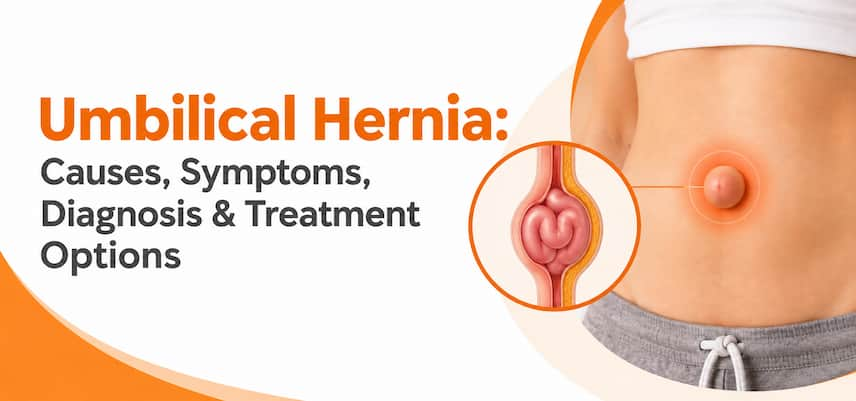
It is a Spot formed in a small opening or Weak Spot in the abdominal wall around the belly button. When tissue or a part of the intestine pushes through this opening, it creates a lump or bulge around that area, which we call a hernia. However, the size of this lump doesn’t tell us how serious the Hernia is.
Some umbilical hernias cause little or no discomfort, while others can gradually become painful or increase in size. In adults, factors such as obesity, pregnancy, previous abdominal surgery, or increased pressure inside the abdomen can contribute to their development.
What Causes an Umbilical Hernia?
There are several factors that can contribute to the development of a hernia.
- Significant weight Gain
- In Pregnancy, stretching of the abdominal muscles can weaken the area around the belly button.
- Heavy lifting and repeated straining can increase pressure inside the abdomen, which can cause this Hernia to develop.
- Repeated coughing sometimes puts stress on the abdominal wall and can cause an umbilical hernia
- Ascites fluid buildup in the abdomen can place continuous pressure on the abdominal wall which can occur Hernia.
- Previous abdominal surgery can weaken the abdominal wall, which can cause an umbilical hernia to occur.
- Age-related muscle weakness: abdominal tissues can become weaker with age.
How Is an Umbilical Hernia Diagnosed?
To diagnose an umbilical Hernia, a surgeon usually examines the belly button area in different positions, such as standing, coughing, or straining, to assess the bulge and determine whether it can be pushed back. In case doctor is unable to diagnose clearly, may recommend an Ultrasound or CT scan to identify the size of abdominal wall defect.
Umbilical Hernia Repair Options
Hernia can be repaired using different techniques depending on the patient’s condition. Surgeons in Modern Hospital evaluate size, location of defect, body weight, symptoms, previous injuries, condition of abdominal, contents of Hernia, etc. Based on these factors, a surgical approach will be considered.
Open Umbilical Hernia Repair
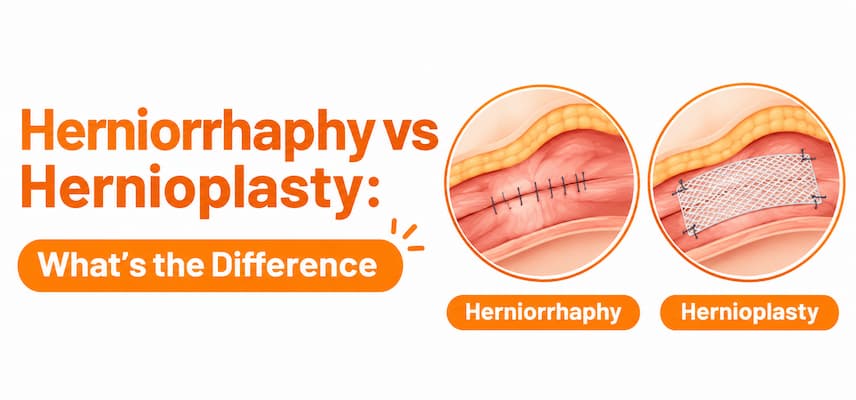
For smaller hernias, it is a practical option; it allows the surgeon to directly access and put the herniated tissue back into the abdomen and repair the weak area with stitches or surgical mesh. The incision and recovery can vary depending on the size and complexity of the hernia.
Laparoscopic Umbilical Hernia Repair
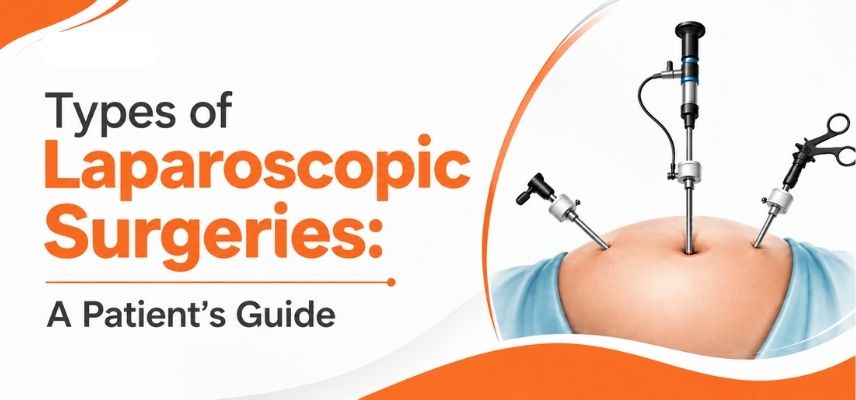
It is performed through small incisions using a camera and specialized instruments. Instead of making one larger incision, the surgeon accesses small points to repair the abdominal wall. Laparoscopic surgery can be particularly useful when dealing with multiple abdominal wall defects, or in selected patients where a minimally invasive approach is appropriate.
IPOM Plus Repair
IPOM stands for Intraperitoneal Onlay Mesh. In an IPOM Plus procedure, the hernia defect is first closed with sutures and then reinforced with mesh placed inside the abdominal cavity.
The “Plus” is important because the technique goes beyond simply covering the defect with mesh. Closing the defect can help restore the abdominal wall and reduce the bulging that may otherwise remain after repair.
eTEP-RS Repair
eTEP-RS (enhanced-view Totally Extraperitoneal Retromuscular) is a more advanced Minimally Invasive Approach in which the surgeon creates access to the retromuscular plane and positions the mesh in this anatomical space. This approach can provide a strong abdominal wall reconstruction while keeping the mesh away from the abdominal organs. It can be particularly useful in selected midline hernias and more complex abdominal wall defects.
Conclusion - Which Option Is Suitable for You?
There is no single Umbilical hernia repair method that is suitable for everyone. Techniques can vary depending on individual anatomy, abdominal surgeries, medical history, symptoms, and the surgeon’s assessment. For some patients, open Repair may be appropriate; for others, laparoscopic repair is considered. For larger or complex abdominal defects, techniques like IPOM plus and eTEP-RS are used.
The goal is to choose the option that provides strong abdominal wall reinforcement while being compatible with the patient’s current health.