Piles are common. At some point in life, a lot of people get piles without even noticing. Piles can develop slowly. Common signs can include bleeding, a small bump near your backside, slight pain, or irritation. Piles, or haemorrhoids, are swollen veins near the anus. Sitting for many hours, pushing hard while using the toilet, and pregnancy are common causes of piles. Piles can develop inside the back passage or just under the skin near the opening where stool comes out.
Different Stages of Piles
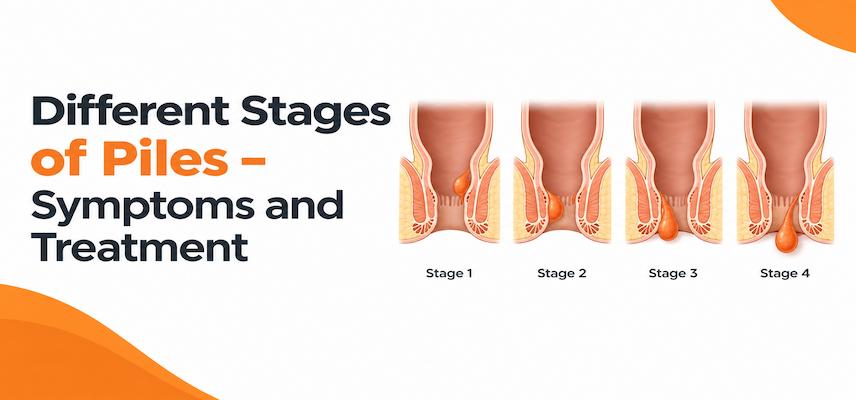
Doctors classify piles into four stages. The stages depend on how much the swollen tissue comes out and if it goes back inside without help.
Stage 1 Piles
Small swellings form inside the rectum. You may see bright red blood on the tissue paper. There's usually no pain. Most people don't even notice stage 1 piles unless they bleed.
Stage 2 Piles
At this stage, bleeding is common. You may notice a small lump that comes and goes or feel itching. The piles may come out when you pass stool but go back inside on their own.
Stage 3 Piles
At this stage, piles come out during bowel movements but do not go back inside on their own. You may need to push them back with your finger.This stage brings more pain, swelling, and discomfort, especially after sitting or walking.
Stage 4 Piles
The piles stay outside and cannot be pushed back in. They may cause constant pain and swelling. There is also a higher risk of blood clots and infection. This is the most serious stage.
Treatment for Different Piles Stages
If you have Stage-1 or Stage-2 piles, it can usually be improved with a high-fibre diet, plenty of water, and avoiding excessive straining during bowel movements. For stage-2 cases, doctor may recommend you for rubber band ligation treatment. For stage-3, you may need laser surgery for piles or sclerotherapy, depending on your condition. Stage 4 piles often require surgical treatment, such as a haemorrhoidectomy. Getting the right treatment at an early stage can help prevent symptoms from becoming more severe.
Frequently Asked Questions
Q.1 Can You Treat Piles Without Surgery?
Ans.1 Simple daily changes can help control early piles. Consume food that contains a lot of fibre, drink enough fluids, and develop good toilet habits.
Q.2 How to sleep with piles?
Ans.2 When sleeping, put a gentle and soft pillow below your hip area to decrease your pain. Then sleep on your side, not your back.
Q.3 Can You Get Permanent Relief From Piles Without Surgery?
Ans.3 Yes, initial piles can be treated without major surgery by adopting a healthy lifestyle and with the help of proper treatment.
Q.4 Can piles be cured permanently?
Ans.4 Surely, they can be treated. Manage piles correctly and prevent causes like long-term constipation; this can stop Piles from coming back.
Conclusion
Ignoring piles can make them worse. If you treat them at stage 1, simple changes may be enough. You may need surgery at stage 4. Timely medical help can prevent your health condition from getting serious. Therefore, if you find symptoms such as passing blood, as well as pain, consult Modern Hospital today to get an accurate diagnosis for your condition and get treatment.