There are two common techniques used in hernia surgery —herniorrhaphy and hernioplasty. Your recovery period, how soon you can resume your daily activities, and the possibility of hernia recurrence can depend on the form of surgery you had. Here, we are explaining the difference between two procedures.
Understanding Herniorrhaphy
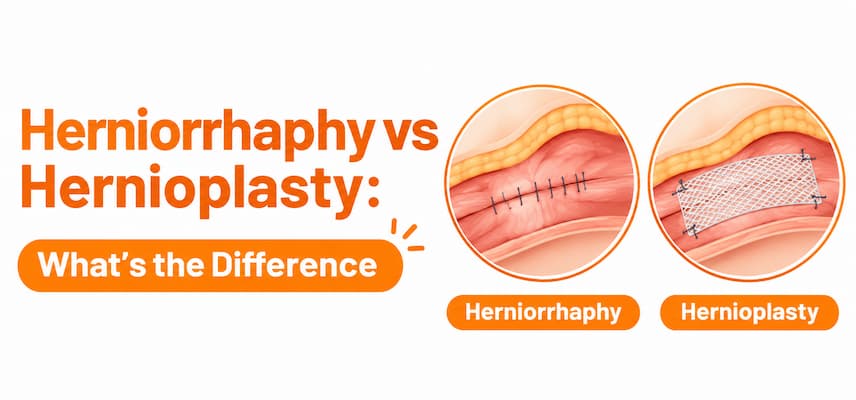
This type of hernia surgery has been used for many years. It may still be used for some small hernias and in children. Rather than using a special patch support, the doctor places the affected tissue back into position and closes the weak part using stitches.
Understanding Hernioplasty
In hernioplasty, the surgeon uses mesh to cover and reinforce the weak area. The mesh also gives extra support and may lower the chance of the hernia coming back. As healing takes place, tissue grows around the mesh and adds strength to the area.
Differences between Herniorrhaphy and Hernioplasty
One big difference is the chance of the hernia coming back. With herniorrhaphy, it may come back in 10% to 15% of cases. With hernioplasty, the chance is much lower, at about 1% to 3%. Herniorrhaphy can also put more strain on the area, which may cause more pulling pain in the first few days after surgery.
How Herniorrhaphy and Hernioplasty Work
Both surgeries can be done with one larger cut or through a few small cuts. Herniorrhaphy uses stitches to close the weak area while Hernioplasty uses mesh to support and strengthen the area. This extra support can help the repair handle pressure from lifting, coughing, or other daily activities.
Which is the Most Suitable Hernia Repair Procedure
Based on your hernia and overall health, your surgeon can help you choose the right repair. Herniorrhaphy may be used for small hernias, especially in children, or when mesh cannot be used. In adult patients, when the hernia is larger than 2 centimeters, hernioplasty is usually performed.
The Recovery Process after Herniorrhaphy and Hernioplasty
After hernioplasty, most people can start light activities within a week and return to work in about two to four weeks. Do not do heavy work or heavy lifting without consulting your doctor. Herniorrhaphy usually takes three to six weeks to heal.
Post- Surgery- Risks and Complications
Both surgeries can also cause problems such as nerve pain, bleeding and infection. Herniorrhaphy does not use mesh, but there is a higher chance that the hernia may come back. Hernioplasty can cause pain from the mesh, and in rare cases, the mesh may move from its original place.
Common Questions about Hernia Repair
Q.1 Is mesh repair permanent?
Ans.1 Yes, the mesh stays in the body for life in most cases.
Q.2 Does Herniorrhaphy hurt more?
Ans.2 Many patients report more pulling pain, since the tissue is under tighter tension.
Q.3 After Hernioplasty, can a Hernia return?
Ans.3 It can return, but the chances are only one to three percent.
Conclusion
Whether you need herniorrhaphy, hernioplasty, or minimally invasive Hernia Repair via TEP and TAPP surgery, the right treatment depends on your individual condition. Modern Hospital provides hernia repair treatments in Jalandhar, with experienced surgeons and minimally invasive surgical options. If you are experiencing a hernia or related symptoms, consult our specialists to understand the most suitable treatment for you.